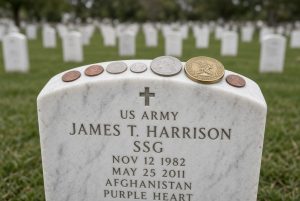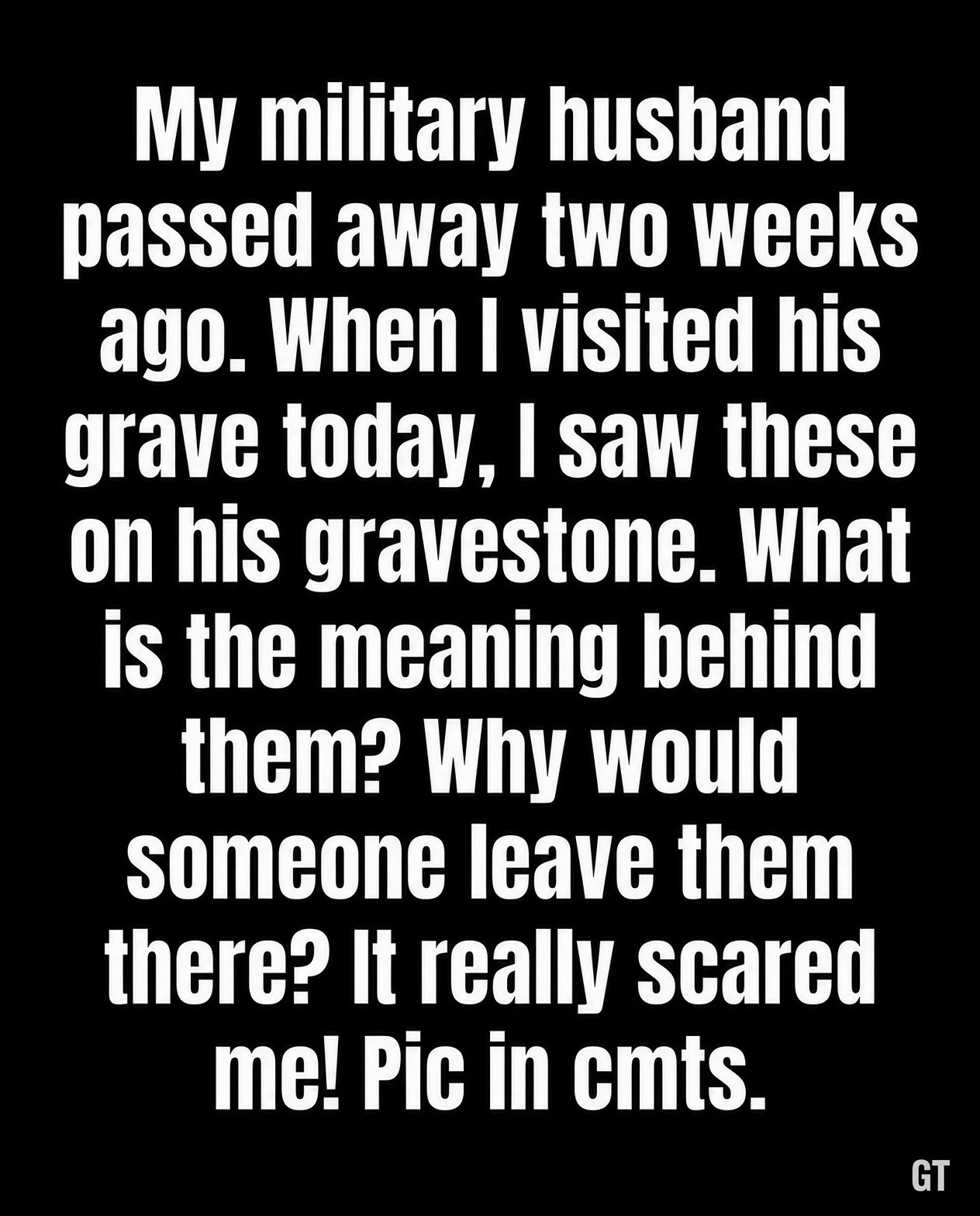
The practice of leaving coins on the headstones of military veterans and active-duty service members is one of the most quietly powerful traditions in American military culture. At first glance it can look mysterious or even unsettling to someone who has never encountered it, especially a grieving family member visiting a new grave. A small cluster of pennies, nickels, dimes, or a single quarter resting on the curved top of a white marble marker can spark confusion and concern. In reality, each coin is a deliberate, respectful message. The tradition lets fellow service members say, without words, that the person buried there has not been forgotten. It is a system of silent communication that has grown over decades and is still observed today in national cemeteries, state veterans cemeteries, and private graveyards across the country.
The meanings attached to each denomination are specific and widely recognized within the military community. A penny simply means that someone stopped by, paid their respects, and wanted the family to know the grave had been visited. It is the most common coin left and can be placed by anyone—veteran or civilian—who wishes to honor the deceased. A nickel carries a deeper connection: it indicates that the visitor and the service member trained together, often at boot camp or basic training. A dime signals that they served together in the same unit, on the same deployment, or in the same theater of operations. The rarest and most solemn is the quarter. Leaving a quarter means the visitor was present when the service member died, whether in combat, in a training accident, or from wounds received in action. These distinctions transform ordinary pocket change into a personal record of relationships forged in uniform. Families who understand the code often find comfort in discovering which coins appear on the stone; each one confirms that their loved one’s service still matters to someone who shared parts of that life.
The roots of the practice reach further back than most people realize. Ancient cultures sometimes placed coins with the dead so the deceased could pay the ferryman for passage to the afterlife. In the modern American military the custom is generally traced to the Vietnam War era, when the country was deeply divided over the conflict. Returning veterans sometimes felt unwelcome or judged when they tried to attend public funerals or memorials. Leaving a coin became a discreet way to show up, honor a fallen comrade, and leave without drawing attention or controversy. Over time the gesture spread beyond Vietnam veterans to service members of every era. Today it is observed at Arlington National Cemetery, Fort Snelling, and countless other military burial grounds. Cemetery staff are familiar with the coins; while some national cemeteries periodically remove them for maintenance and to protect the stone from discoloration, the emotional meaning is widely respected. Challenge coins—those heavy, unit-specific medallions that service members exchange as symbols of membership and achievement—are sometimes left as well. Because they are not currency and often carry personal or unit significance, finding one on a headstone is considered an especially intimate tribute.
For families, the appearance of coins can be emotionally complex. A widow or parent who has never heard of the tradition may initially feel alarmed, exactly as the viral social-media posts that circulate every few years describe. Once the meanings are explained, the same coins frequently become a source of solace. They prove that the service member’s comrades still remember, still visit, and still feel a bond that outlasts death. Many Gold Star families keep the coins they find, placing them in shadow boxes or simply setting them aside as tangible proof that their loved one is not alone. The practice also reinforces a broader military ethic: no one is left behind, not even after they are gone. It is one of the ways the community continues to take care of its own long after the uniform has been hung up and the funeral has ended.
The tradition continues to evolve while remaining recognizably the same. Newer generations of veterans, including those who served in Iraq and Afghanistan, have adopted and adapted it. Some leave foreign coins from deployments; others add small stones in the Jewish custom of marking a visit. Social media has made the meanings more widely known, so civilians who simply want to honor a veteran sometimes leave a penny after reading about the custom. National cemeteries still balance respect for the gesture against practical concerns about mowing, stone preservation, and safety. The core message, however, has not changed. A coin on a military grave is never random and never meant to frighten. It is a quiet, durable way of saying that the person who rests there mattered, that someone who shared the same experiences stopped by, and that the brotherhood or sisterhood formed in service does not end at the cemetery gate.